Catalyst & material design
Designing metal catalysts, zeolites and oxide–carbon composites. Understanding how active sites, acidity and surface chemistry shape catalytic performance.
Nuttapat Thiensuwan, Ph.D.
Designing catalysts. Understanding reactions. Transforming biomass into renewable chemicals and sustainable fuels.
ดร.ณัฐภัทร เทียนสุวรรณ
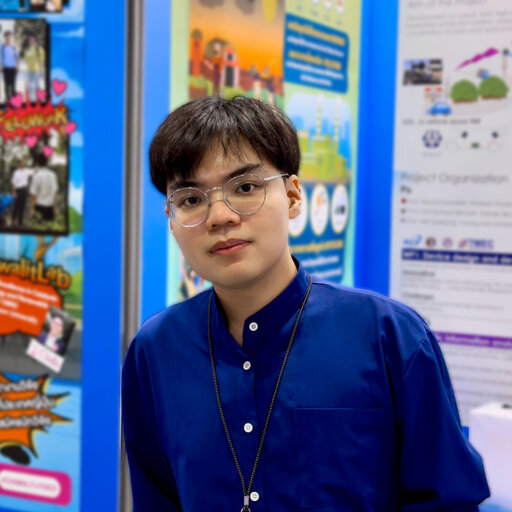
About me
I am a Lecturer in the Department of Chemical Technology, Faculty of Science, Chulalongkorn University, and a researcher at the Center of Excellence in Catalysis for Bioenergy and Renewable Chemicals (CBRC).
My research connects catalyst design, surface chemistry and reaction engineering to the conversion of biomass into useful chemicals and fuels. I am particularly interested in how the structure and local environment of active sites control reaction pathways and selectivity.
Research experience in Thailand, Japan and Australia has shaped a collaborative approach to developing and understanding heterogeneous catalysts. Alongside research, I contribute to teaching, academic communication and international research coordination.
Research directions
Three connected research directions, united by a focus on materials, selectivity and renewable resources.
Designing metal catalysts, zeolites and oxide–carbon composites. Understanding how active sites, acidity and surface chemistry shape catalytic performance.
Selective conversion of biomass-derived molecules, from glucose and HMF to FDCA and methyl levulinate, with an emphasis on catalyst function and reaction pathways.
Catalytic upgrading of lignin-derived compounds and biomass feedstocks toward renewable hydrocarbons, sustainable aviation fuel research and integrated biorefineries.
Interested in a shared research question, a seminar or a collaboration?
Start a conversationSelected scholarship
Research articles, reviews and a book chapter spanning catalyst design, biomass conversion and renewable chemicals.
Journal of Industrial and Engineering Chemistry 163, 392–403
Combining RuNi/hydroxyapatite with HZSM-5 adjusts acidity to direct guaiacol upgrading toward cyclohexanol or cyclohexane.
ACS Sustainable Chemistry & Engineering 14, 13098–13113
Coordinating platinum sites and beta-zeolite acidity enables selective conversion of HMF into methyl levulinate.
Sustainable Chemistry and Pharmacy 51, 102405
Tin incorporation and dealumination tune ZSM-5 acidity for selective conversion of glucose into HMF.
Metal–Organic Framework Composites: Energy Storage, Catalysis, Adsorption and Drug Delivery, 199–226
A book chapter examining MOF-based catalytic materials for synthesis of chemicals from renewable resources.
Bioresource Technology 445, 134142
Waste-derived carbon quantum dots modify ruthenium nanocomposites to influence base-free HMF oxidation and product selectivity.
Catalysis Reviews, 1–42
Reviews multifunctional MOF catalysts for sequential and one-pot conversion of fructose into FDCA.
Chemical Engineering Journal 511, 161520
Ruthenium on layered oxide–graphene oxide supports links catalyst surface chemistry with selective HMF oxidation to FDCA.
Materials Today Sustainability 28, 101005
Iron and tungsten modification changes ZSM-5 acid sites and controls glucose dehydration selectivity.
Carbon Capture Science & Technology 13, 100262
Amine-functionalized MOFs combine carbon dioxide adsorption with catalytic conversion of epoxides into cyclic carbonates.
ACS Sustainable Chemistry & Engineering 11, 11424–11436
Exfoliated MgAl oxide supports enable ruthenium-catalyzed oxidation of HMF into FDCA without added homogeneous base.
Try another keyword, year or research topic.
Experience & education
Learning and working across institutions, disciplines and cultures.
Current appointment
Chulalongkorn University · Thailand
Department of Chemical Technology, Faculty of Science. Research and teaching in catalysis and biomass valorization.
January – April 2026
The University of Sydney · Australia
International research with Prof. Jun Huang in catalysis and biomass conversion.
Appointment began May 2025
Chulalongkorn University · Thailand
Research with Prof. Chawalit Ngamcharussrivichai on heterogeneous catalysts, renewable chemicals and sustainable fuels.
May 2023 – February 2024
Tokyo Institute of Technology · Japan
Hosted by Prof. Toshiyuki Yokoi. Research on zeolite-based catalysts for biomass conversion. The institution is now part of Institute of Science Tokyo.
August 2019 – April 2025
Chulalongkorn University, Thailand
Dissertation: Selective Oxidation of 5-Hydroxymethylfurfural over Ruthenium Supported on Carbon-based Composites.
August 2015 – July 2019
Chulalongkorn University, Thailand
Second Class Honors
Teaching & academic service
I connect the fundamentals of chemical technology with current research, bringing catalyst science, critical reading and reaction engineering into the learning experience.
Invited presentation · STT51, 2025
Catalyst design for multi-feedstock biorefineries and the conversion of biomass into biochemicals.
View the event reportHomogeneous and heterogeneous catalysis, adsorption and chemisorption, kinetic models, and the effects of mass and heat transfer.
Materials and Energy Balances (2306203), and Chemical Process and Plant Design (2306402), Chulalongkorn University.
CBRC research coordination and academic communication; Thai-side coordination for the SATREPS Biorefinery collaboration; peer review for international journals in chemistry and chemical engineering.
Let’s connect
For research collaborations, academic exchanges and speaking invitations, I would be glad to hear from you.
Nuttapat.t@chula.ac.thCenter of Excellence in Catalysis for Bioenergy and Renewable Chemicals
ศูนย์เชี่ยวชาญเฉพาะทางการเร่งปฏิกิริยาสำหรับพลังงานชีวภาพและสารเคมีหมุนเวียน